Updated July 2026

    Best Islamic credit cards in UAE 2026: Shariah-compliant cards ranked

    The days of Islamic cards being "niche" products are over. With the UAE positioned as a global Islamic finance hub, and Dubai hosting the world's largest Islamic economy initiative, Shariah-compliant cards have achieved parity with conventional banks—and in some areas like digital payments, they're actually outperforming them.

    But the market has shifted. The era of unconditional benefits is gone. Today, you need to navigate "spend-based" lounge access and nationality-based caps. Here's how to extract maximum value while staying 100% halal.

    The 3 market shifts you need to know

    Before you apply for any Islamic card, understand these new rules of engagement. They'll help you avoid "breakage" (expired points) and hidden fees.

    1. The "Spend-Based" lounge gate

    Holding a Platinum or Infinite card is no longer enough to walk into a lounge.

    The new rule: You must complete at least one international transaction (min. USD 1) per calendar year to unlock your lounge entitlement.

    The risk: Without that spend, you'll be charged around USD 32 at the door. Your first visit of the year is usually free, but don't count on it.

    2. The cashback wars and digital wallets

    Banks like Sharjah Islamic Bank have pivoted to "Tokenized Spend." Using Apple Pay or Samsung Wallet now triggers higher reward tiers than using the physical card.

    The new rule: Digital wallet transactions can earn up to 10% cashback vs. 1% on plastic.

    The risk: If you're still swiping your card instead of tapping your phone, you're leaving money on the table.

    3. The expat vs. national divide

    State-linked banks have introduced tiered benefit caps based on nationality.

    The new rule: On identical products, UAE Nationals often enjoy a 50% higher cashback ceiling than Expatriates.

    The risk: As an expat, you may hit your cap much faster than expected on cards like FAB Islamic.

    The fine print: how Islamic cards actually work

    Understanding the mechanism is the only way to avoid costs. Here's what you need to know.

    Ujrah vs. Tawarruq: Know Your Contract

    Ujrah (Fee-Based): Used by banks like Standard Chartered Saadiq. You pay a fixed monthly fee, often waived if you pay in full. Think of it as a "service charge."

    Tawarruq (Commodity Profit): Used by ADIB and Emirates Islamic. If you carry a balance, the bank sells you a commodity at a markup.

    Warning: The "Profit Rate" averages 3.49-3.75% per month. That translates to an APR of over 40%. You must pay in full every month to make these cards viable.

    The "Charity" Penalty

    Islamic banks can't charge interest on late payments. Instead, they charge a "Commitment to Donate" (around AED 236).

    • Where it goes: To charity, supervised by the Shariah Board.
    • Impact on you: It still hurts your wallet and damages your Al Etihad Credit Score.

    Our top 5 Islamic cards for 2026

    Top Pick
    The Digital Optimizer

    Sharjah Islamic Bank (SIB) Cashback Titanium

    SIBBest for daily spend

    The 10% digital wallet hack
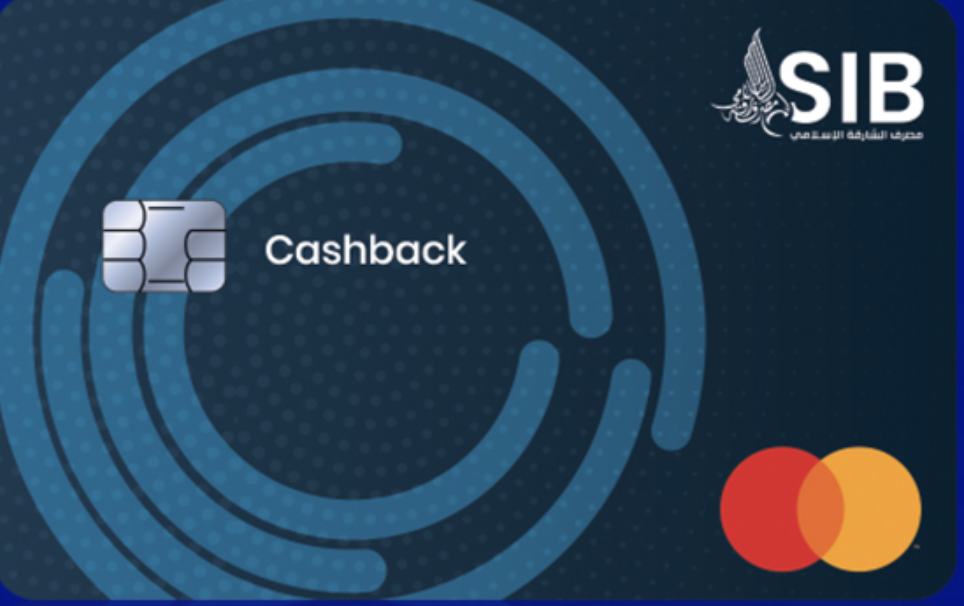
    Sharjah Islamic Bank (SIB) Cashback Titanium
    The killer feature: 10% cashback on all Apple Pay and Samsung Wallet transactions
    How to use it: Pay for groceries, fuel, and dining with your phone. Digital wallet transactions bypass the lower category rates
    International power: Earns an uncapped 2% on all non-AED spend abroad

    Best for: Tech-savvy users who pay with their phone for everything

    Pros

    • Unbeatable 10% on mobile wallet payments
    • Shariah-compliant (Tawarruq structure)
    • Uncapped 2% on international spend
    • Simple strategy: tap phone, earn more

    Cons

    • 10% cashback capped at AED 300/month (requires AED 3,000 spend)
    • Low rates on utilities (0.5%)
    • Need AED 10k annual spend to waive fee

    The caveat: This is the best secondary card for digital-first users. Max out the AED 3,000 digital spend each month, then use another card.
    The Family Anchor

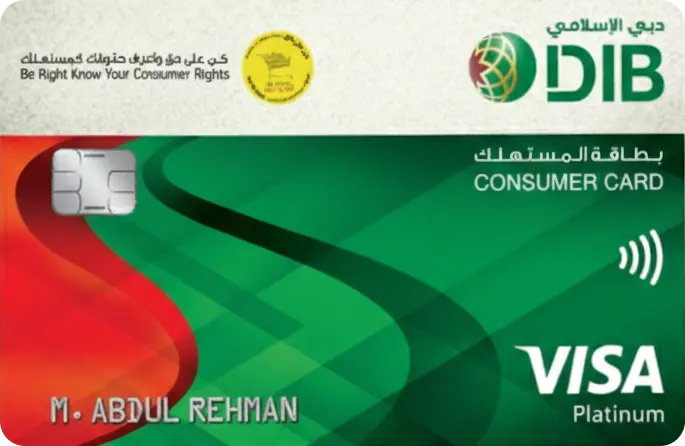
    Dubai Islamic Bank (DIB) Consumer Cashback Platinum

    DIBBest for utilities and school fees

    The high-cost-of-living card

    Dubai Islamic Bank (DIB) Consumer Cashback Platinum
    The killer feature: 4% flat cashback on school fees, DEWA/SEWA utilities, Etisalat/Du bills, and auto servicing
    Why it matters: These are the hardest categories to earn rewards on with most cards. DIB actually rewards you for paying your bills
    Monthly cap: AED 1,000 cashback ceiling is generous enough for most households

    Best for: Families with school fees, utility bills, and car servicing costs

    Pros

    • 4% on school fees (rare in the market)
    • 4% on utilities (DEWA, SEWA, telecom)
    • 4% on auto servicing
    • Shariah-compliant with no interest

    Cons

    • Minimum spend jumping to AED 4,000/month (effective May 10, 2026)
    • Currently AED 3,000 minimum to earn cashback
    • Lower rates on other categories

    The caveat: Essential for families with older cars and large villas. Just be aware the minimum spend requirement is increasing in May 2026.

    The Status Accelerator

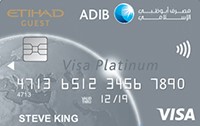
    ADIB Etihad Guest Visa Platinum

    ADIBBest for travelers

    Buy airline status with your card

    ADIB Etihad Guest Visa Platinum
    Fast track to Gold: Complete just two return flights with Etihad in 12 months to earn Etihad Guest Gold Tier
    Gold benefits: Global lounge access for you + 1 guest, priority baggage handling, extra baggage allowance
    The BOGO voucher: Spend AED 150k/year and receive a Companion Ticket (taxes only). Save AED 5,000+ on long-haul routes

    Best for: Frequent Etihad flyers who want Gold status and companion tickets

    Pros

    • Fastest path to Etihad Gold status
    • Companion ticket worth thousands
    • Shariah-compliant (Tawarruq)
    • Good base earning on Etihad spend

    Cons

    • Need to fly Etihad to unlock best value
    • High spend threshold (AED 150k) for companion ticket
    • Miles locked to Etihad ecosystem

    The caveat: This is the only Islamic card that lets you "buy" airline status through credit card usage. Perfect if you fly Etihad regularly.

    The Risk-Averse

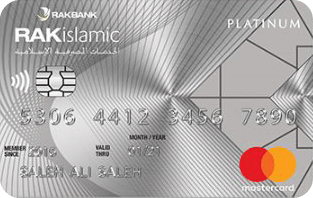
    RAKislamic Platinum Credit Card

    RAKBankBest entry level

    The financially safe choice

    RAKislamic Platinum Credit Card
    Free for life: No annual fee, ever. Zero. Not waived—just free
    Takaful Shield: Market's strongest Involuntary Loss of Employment (ILOE) insurance, covering up to AED 8,000/month for 12 months if you lose your job
    Credit building: Perfect for establishing your UAE credit history without fee pressure

    Best for: New cardholders, credit builders, and anyone who wants a safety net

    Pros

    • Genuinely free for life
    • Best job-loss protection in the market
    • Shariah-compliant
    • No minimum spend requirements

    Cons

    • Lower reward rates than premium cards
    • Limited perks compared to paid options
    • No travel benefits

    The caveat: The perfect "starter" card or emergency backup. Keep it in your wallet for the insurance alone.

    The Demographic Divide

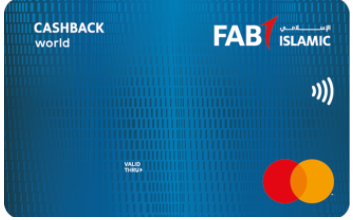
    FAB Islamic Cashback Card

    FABStrong but nationality-restricted

    Great rates, but check the caps

    FAB Islamic Cashback Card
    The rates: 5% cashback on groceries and 5% on fuel—some of the best in the Islamic market
    The catch: Caps are nationality-based: UAE Nationals get AED 300/category, Expats get AED 200/category
    Do the math: Expats hit the AED 200 cap at just AED 4,000 spend. For large families, this may be too restrictive

    Best for: UAE Nationals with high grocery and fuel spend

    Pros

    • 5% on groceries (excellent)
    • 5% on fuel (excellent)
    • Shariah-compliant
    • Strong for moderate spenders

    Cons

    • Nationality-based caps (expats get 33% less)
    • AED 200 expat cap reached at AED 4,000 spend
    • Better alternatives for high-spending expats

    The caveat: A strong contender for UAE Nationals. Expats should compare carefully—DIB or SIB may deliver more value for larger families.

    The 2026 lounge access guide

    Don't get caught at the gate. Physical Priority Pass cards are basically obsolete now.

    1

    Download the app

    Use Visa Airport Companion (DragonPass) or Mastercard Travel Pass

    2

    The trigger

    Make at least one international transaction (min USD 1) per calendar year

    3

    The penalty

    If you haven't made that spend, you'll be charged ~USD 32 per visit

    Exception: The first visit of the year is usually complimentary regardless of spend history (bank dependent).

    The "Halal Duo" portfolio strategy

    To maximize your yield in 2026 without paying interest, use this two-card combination.

    1

    Domestic card (The Earner)

    SIB Cashback Titanium

    Load it onto Apple Pay. Use it for all local groceries, fuel, and dining up to AED 3,000/month to get your AED 300 profit.

    2

    International card (The Traveler)

    ADIB Etihad Guest Platinum

    Use this for all flight bookings and international travel to unlock Gold Status and avoid the digital wallet cap.

    Ready to apply?

    Make sure you meet the new minimum salary thresholds (typically AED 5,000 - AED 8,000). Take our quiz to find the perfect Islamic card match for your spending habits.

    Find your perfect match in 2 mins

    Personalized recommendations based on your salary & lifestyle

    Islamic Banking Regulation in the UAE

    The UAE is one of the world's leading Islamic finance markets, with the Central Bank of the UAE (CBUAE) and the Higher Shariah Authority (HSA) providing regulatory oversight for all Shariah-compliant financial products. Established in 2018, the HSA serves as the supreme authority on Shariah matters for UAE-licensed financial institutions, ensuring consistency across Islamic banks in Dubai, Abu Dhabi, Sharjah, and the Northern Emirates. Each Islamic bank also maintains its own internal Shariah Board that reviews and approves product structures such as Ujrah fees and Tawarruq commodity transactions used in Islamic credit cards.

    The Dubai Islamic Economy initiative has positioned the emirate as a global hub for Islamic finance, driving competition that benefits consumers through better card rewards and lower fees. The Al Etihad Credit Bureau (AECB) scoring system applies equally to Islamic and conventional card applications—your credit history matters regardless of the financing structure. UAE residents applying for Islamic credit cards need a valid Emirates ID, proof of income through the Wage Protection System (WPS) or bank statements, and must comply with the CBUAE's Debt Burden Ratio (DBR) cap of 50% on total monthly debt obligations.

    Frequently asked questions

    Find your perfect Islamic card

    Not sure which Shariah-compliant card is right for you? Take our 2-minute quiz and we'll match you with the best halal card for your spending habits.

    Compare Islamic cards now

    Advertiser Disclosure: We may earn a commission from partner links. Learn more